As what happens anytime I work, I’ve been too tired to write. But I took some lazier days off today, so I figured a small update on farm life was necessary to put on the agenda for today.
The season has started to pick up, and the last few days have had us starting at 7:30am and finishing up around 6pm. I’m not entirely sure when our days will begin to start at 5am, but I’m sure that time is right around the corner.
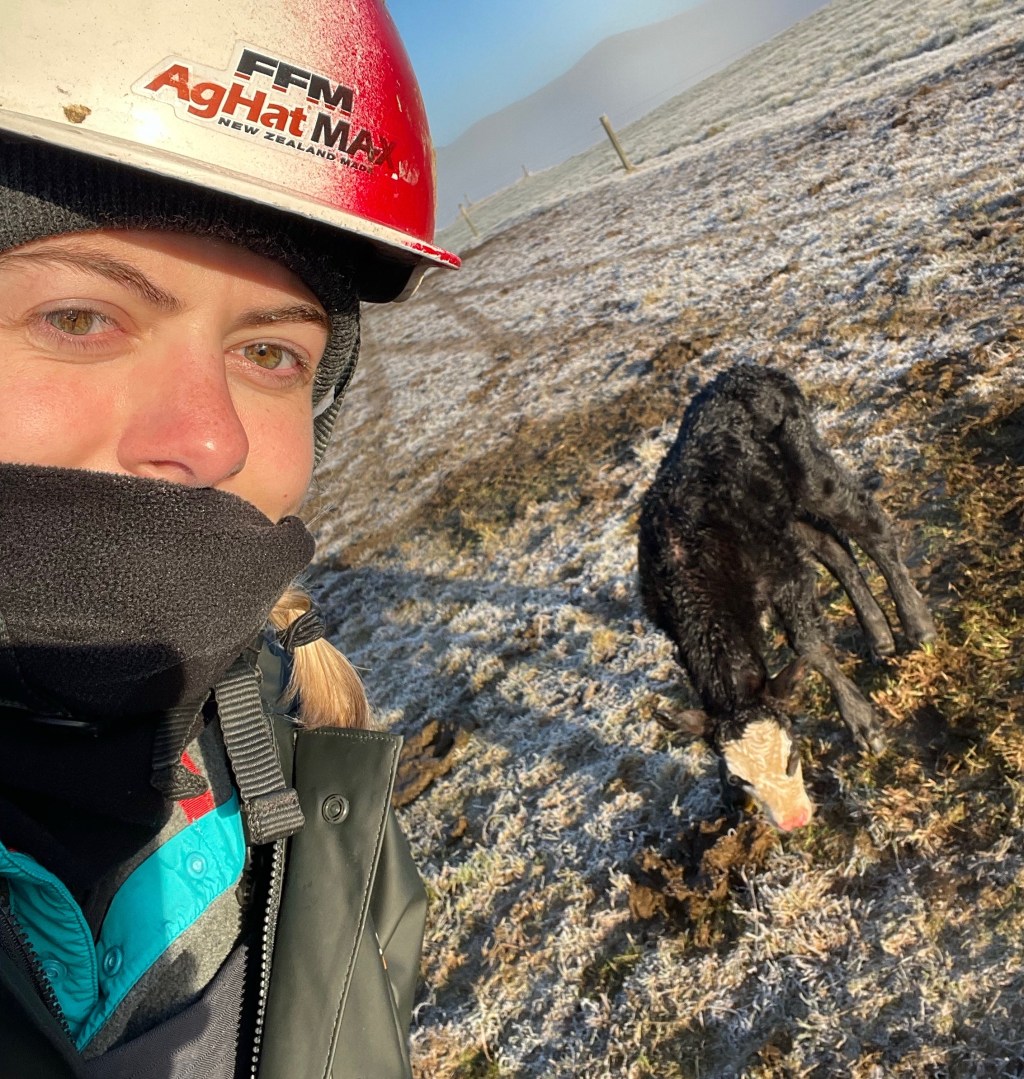
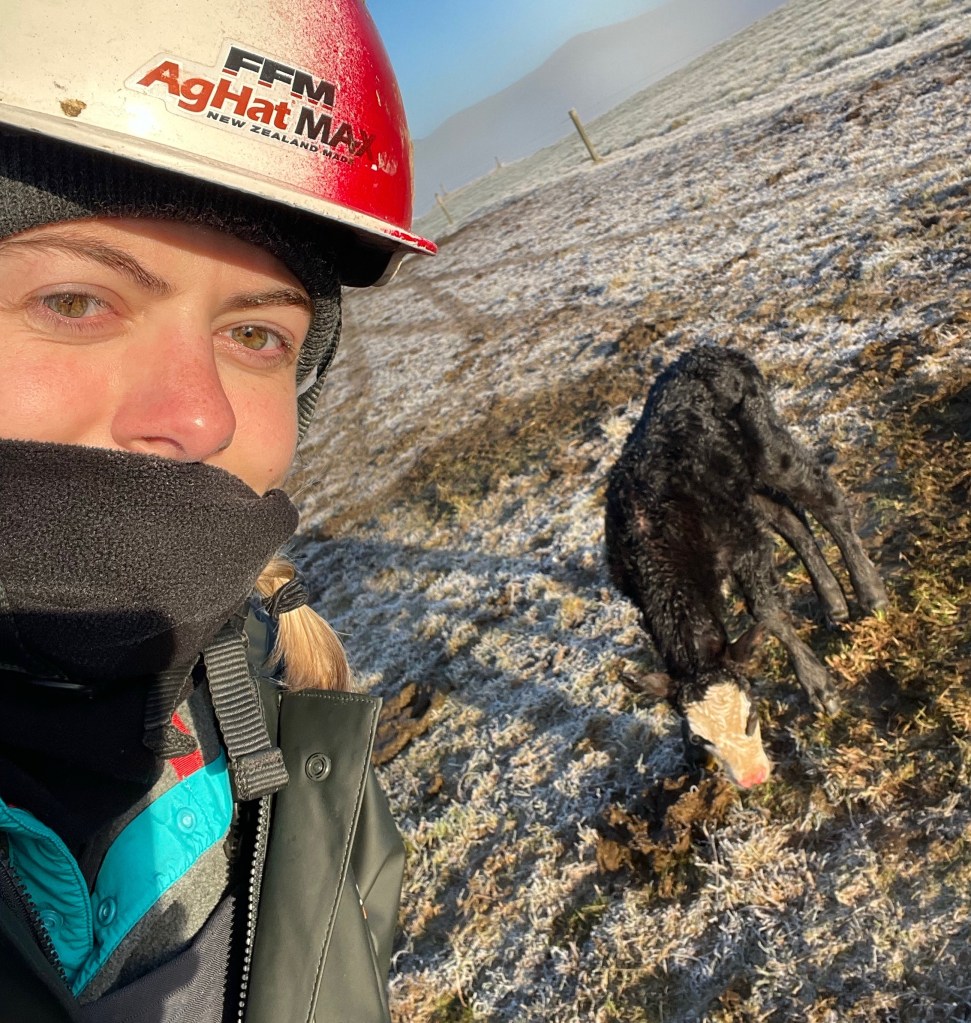
Lately, as calving season has begun, our days start with kidnappings and end with milking. Most of the cows give birth overnight, more so when the temperatures are freezing or there’s been a frost, for reasons that haven’t been expanded upon to me. As soon as they’re born, sadly, we steal them out of the paddocks and away from their moms, bringing them up to the separate shed where we keep the calves.
The first morning I took part in the kidnappings, I felt terrible and worked hard to hide my sadness. I was surrounded by experienced farmers who were used to this whole business, while it was a shock to my system. To make matters worse, after we picked up calves and placed them on our trailer to take them away, some of the mom’s chased after the truck until they couldn’t follow any more. The only way I consoled myself with justifying taking them away was because the majority of the calves were shivering, and the shed we were taking them to was warmer and protected from the elements.
From that first morning, I’ve become more used to the whole process and don’t dwell on my empathy. If I did every morning, there’s no way I’d be able to survive this whole experience. And whether I’m there or not, it happens. Now, the main hindrance that plagues me is my physical strength. I always thought myself fairly strong, but sometimes when I squat down to pick up a calf, I can’t stand back up again with it in my arms.
The calves weigh anywhere from about 40-60 pounds each. Sometimes I can tell just by looking at one if I’ll be able to grab it myself, or if I might collapse trying. I have no idea how the moms push these gigantic babies out like it’s nothing.
Of course, farm life isn’t without its dark sides and other tragedies that go beyond kidnappings. As with any birth, there are dangers to the mothers and babies. I’ve seen calves that haven’t made it, or calves that became stuck and needed assistance being born. I’ve seen calves that didn’t make it from the get-go, or calves that survived for several days before passing on in the calf shed. It’s odd going from sheltered experiences and ideas about farming, to then firsthand witnessing all the ins and outs of what goes on behind the scenes. It’s even stranger getting used to it all and having it become my every day.
And then, there are the gross sides, like the massive amounts of poop that cows produce and see fit to let go at any time. While that seems to be an obvious daily part of working with any animal, you really don’t know how much shit there is until it’s covering you from the chest down. Luckily, we have gear to wear over pretty much our whole body that makes it easy to wash off. The only unprotected area I have is my face, which is unfortunate, and has been a victim to a few flecks of unmentionable brown stuff at some points.
Since more backpackers have joined us on the farm recently, I’ve become more comfortable with the milking shed. It was nice having more hands and more help for when a cow wasn’t feeling like being cupped that day, not that I could blame them. Right before we were joined by more people, we’d had a very short-staffed weekend, and I found myself being the only one cupping cows. That was probably my least favorite and most stressful time on the farm so far, and had me wanting to run away from the whole thing. With the addition of four more people, it took so much stress off, and I hope that comfort and support continues.
In working more with the calves, I would still say I prefer it more to the milking shed. It’s extremely loud when you first walk into the calf shed in the morning, as about 200 calves are hungry and demanding your attention. As you go from pen to pen feeding them, they begin to quiet down, and you can hear yourself think a bit more.
When we first bring new calves to the calf shed, we have to do another round of picking up calves and delivering them to their new pen. Then, for all the new babies, we also have to teach them how to feed, another thing I’d never thought of.
To teach a calf to feed, or to do anything with them really, you have to be a little rough, which took me a while to get comfortable with. They’re sturdy, given that they begin at such a hefty weight already, and can handle being held with a stronger grip or being given helpful pushes in the right direction.
Their feeders are essentially just semi-circle bins that we hang on the inside of their pens. We fill buckets with milk and dump them in. There are about 10 nipples on the outside of the feeder where the calves can line up and feed. To measure the right amount, we multiply the number of calves by 4, as each calf gets 4 liters per day. Of course, it’s impossible to ensure each calf is getting exactly 4 liters when they’re all moving around and swapping spots on the feeders, bumping their siblings off. But they get what they need.
Circling back to how we teach them to feed, usually it just takes the first day to show them, then a little support the second day, and by the third day, you can dump the milk in and they come running, feeding instantly. To initially get them to feed from the feeder, you have to go and grab a calf one by one. I’ll first push them closer to the feeder, then I essentially have to hold a squat over them while I hold their head between my thighs. Even though I’m trying to teach them a life skill, they’re fairly resistant, so I have to hold their head in line with the feeder so I can get them introduced.
To preface, I’m constantly wearing gloves. But after I have their head secured, I’ll dip two fingers into the milk, and then shove my fingers in their mouth. At that point, instinct takes over and they begin to relax, sucking on my fingers. Then, the tricky part can be getting them to transfer from my fingers to the nipple on the feeder. Some take to it quickly and stay latched on as I let them go. Others take to the nipple, but as soon as I let them go, they rip their mouth from the feeder and get a little angry with me. Then, they proceed to head butt the feeder and have no idea how to get back on. So, I repeat the process until they’re independent enough to reattach to feed.
We’ve generally had about 25-50 new calves to teach every day, which can take a while depending on how they’re learning and accepting it. Apparently, by the end of calving season, we’ll have around 500 calves in our shed. Luckily, once they’re all taught, we’ll never have to teach them again.
Even when they do know how to feed, the calves can still be a bit chaotic. We enter the pens every time we start feeding to ensure that every calf has a spot on the feeder and is feeding properly. While I’m reorganizing 20 or so squirming bodies, some come over to me as if I’m their mother and start head butting me, trying to get milk. And as I’m often covered in milk from sloshing the buckets around, some find a bit and begin sucking on my sleeves, or the bottom of my jacket, trying to get whatever food they can. They’re relatively easy to redirect, as easy as pushing a 50 pound, four-legged baby can be, and once you show them to the feeder, they generally forget about you completely.
It’s been almost a month since I started, and despite the harsh realities and utter newness of everything, I’m glad that I decided to try working on a dairy farm. I can say pretty confidently though that I think this will be my first and last experience working on a farm. As much as I love the outdoor aspect and working with animals, it still constantly feels wrong how we use animals like this for our benefit. However, that’s the nature of the industry, and how a lot of people make their living. It’s been interesting to hear from some of the full-timers as well how they share those same sentiments, but you do what you need to do.
Although I’ve only been settled in for a month, I already feel antsy to be on the road and trying new things again. I’m trying to stave off that impulse by taking little trips on my days off, but that feeling seems to just be apart of who I am. I love being on the move and enjoy the freedom of the road, especially as a solo traveler where I am the sole decision maker of the path my adventure takes. I think it’s almost become addicting. But I definitely need the money from all these hours I’ll be working in the busy season, so I’ll be here saving up to continue living on the road in another few months!
 It's Raining Jen